

Driving a Motorhome in Scotland: A First-Timer’s Guide
The driving is the bit first-timers worry about most, and the bit that turns out to be easiest. A motorhome on Scotland's roads is calmer than it looks, as long as you don't try to cover too much ground. Here is the honest version: how far to drive in a day, how single-track roads work, where to park, and the one mistake almost everyone makes their first time out.
Key takeaways
How far should you drive a motorhome in a day?
Less than you’d plan in a car. The trick is to think in hours, not miles: two to three hours of driving is plenty for a day in a motorhome, which on Highland roads might be only 100 to 150 miles, and a good deal less once you’re on single-track. Aim to be parked up by mid-afternoon so you set up in daylight and actually enjoy where you’ve stopped. The roads are slower than the map suggests, you’ll want to pull over for the views, and the whole point is the stopping, not the distance.
What does a sensible first day look like?
Something like this. Collect mid-morning, drive the two hours up the A82 along Loch Lomond and into Glencoe, stop for lunch and a leg-stretch on the way, and be on a campsite by mid-afternoon with time to walk and cook a proper dinner. You’ve covered barely 100 miles, driven one of the great roads, and you’re not frazzled. That’s the template for the whole trip: short hops, early stops, and evenings that feel like a holiday rather than the end of a commute.
What are single-track roads actually like?
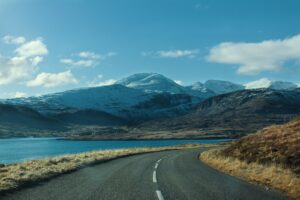
Easier than they sound, once you’ve got the rhythm. A single-track road has regular passing places, usually marked with a white diamond sign. If a car comes the other way, or catches you from behind, pull into a passing place on your left, or wait opposite one on your right, and let them through; a wave is the thank-you. Don’t park in a passing place, even for a photo, and if you have to reverse a little to reach one, that’s normal and no drama. The fleet is sized for these roads and the reversing camera does the hard part. If a route’s been in the news for closures, check Traffic Scotland before you set off.
Is a motorhome hard to drive?
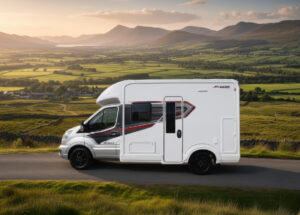
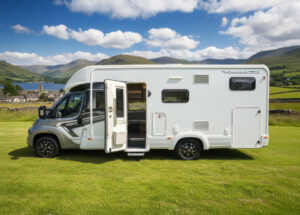
No, and most people relax inside the first hour. The fleet is mostly automatic, so there’s no clutch to think about, and everything drives on a standard UK car licence. Collection includes a 30-minute walk-round so you leave knowing the vehicle, the reversing camera and mirrors are there for the tight bits, and full roadside cover and a real person to call are included if anything ever feels off. Drive to the conditions rather than the clock, take it steady in rain or low cloud, and watch for deer on Highland roads at dawn and dusk. John, our Operations Manager, spends most collection mornings talking first-timers through exactly this, and the same people are cheerfully reversing into passing places by day two.
Where do you park a motorhome?
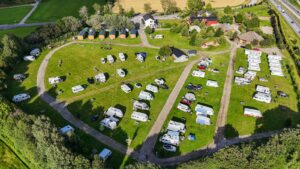
Not in city centres. Glasgow and Edinburgh have little motorhome parking to speak of, and the park-and-rides have height barriers, so the move is to base at a campsite or stopover on the edge and walk or bus in. Out and about, the bigger attractions, castles, beaches and distilleries, usually have coach or motorhome bays, and supermarkets on the edge of towns are handy for a stock-up with room to turn. When in doubt, a campsite for the night beats hunting for a space.
The biggest first-timer mistake
Packing the itinerary too tight. It’s tempting to try to see the whole of Scotland in a week, but the trips people love are the ones that slow down: pick two or three bases, stay two or three nights at each, and leave the odd day with nothing planned at all. You’ll come back having seen less and felt more, which is rather the idea.
Before you set off, our preparing for your trip page and the FAQs cover the practical bits, and if you’re still deciding what to hire, the campervan versus motorhome guide will help you choose. Th