
Wild Camping and Overnight Stays in Scotland by Motorhome
Scotland is made for motorhomes, but wild camping is the most misunderstood part of a trip here. The right to roam everyone has heard of covers tents on foot, not vehicles, so the rules for a motorhome are different, and worth getting straight. This is the honest version: what the law actually says, where you can legitimately stop overnight, how the Loch Lomond permits work, the apps people use, and how to do it without spoiling it for anyone else.
Key takeaways
Is wild camping legal in Scotland in a motorhome?
Not in the way a lot of people assume. Scotland’s celebrated right to roam, set out in the Land Reform (Scotland) Act 2003 and the Scottish Outdoor Access Code, gives a right of responsible access on foot and by other non-motorised means, and it does allow wild camping. But that means lightweight, tent-based camping, in small numbers, for two or three nights, leaving no trace. The Access Code does not recognise wild camping in a vehicle. A motorhome or campervan is a motorised vehicle, so the right to roam simply doesn’t cover sleeping in one; to stop overnight on private land you need the landowner’s permission. It is the single most common misunderstanding we hear, and getting it right saves a lot of bother.
So where can a motorhome stop overnight?
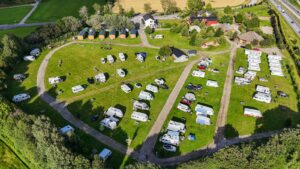
Four options, in rough order of certainty. Campsites are the reliable choice, with hook-up and facilities, typically £25 to £40 a night in peak season. Aires are designated motorhome stopovers, more like a tidy car park with fresh water and waste disposal, usually £15 to £30. Designated stopovers are spots where a landowner, farm or pub lets you stay, often for a small fee or the price of a meal. Laybys are the grey area: people do use them, but “no overnight parking” signs are spreading in popular spots, and the rule of thumb is to keep everything inside the vehicle, no awning, no chairs, no BBQ, because that crosses from parking into camping. Never block a passing place or a field gate, and move on if you are asked to.
What are the rules around Loch Lomond and the Trossachs?
This is the one part of Scotland with specific byelaws, so it’s worth knowing before you go. Between 1 March and 30 September, Camping Management Zones operate along the busiest lochshores, covering less than 4% of the National Park. Inside those zones you need either a campsite or a permit to camp, and in some places to stay overnight in a motorhome. There are dedicated motorhome permit areas at Firkin Point and Inveruglas on the west side of Loch Lomond and the Three Lochs Forest Drive north of Aberfoyle. Permits cost £4.50 a night at the time of writing and, for a motorhome, run from 7pm to 10am. Outside the zones, and everywhere in the Park from October to February, the byelaws don’t apply. Book permits ahead on the National Park’s own website.
Which apps do people use?
Three do most of the work. Searchforsites is the go-to in the UK for aires and stopovers; Park4Night is the biggest community map of places people have actually stayed; and CamperContact lists tens of thousands of spots and works offline, which matters where there’s no signal. Treat the reviews as a guide rather than gospel, and always trust the signs on the ground over the app.
How do you do it responsibly?
The golden rule is leave no trace. Keep camping behaviour for campsites; on a roadside stop, that means nothing outside the vehicle at all. Take every scrap of rubbish with you, keep the noise down, arrive late and leave early, and never empty waste water or the toilet anywhere but a proper disposal point, which our waste disposal guide covers. If there’s an honesty box at a car park or toilet, use it, as these are often kept going by local volunteers. Above all, remember that people live in the places you’re passing through; a bit of consideration is what keeps these spots open for the next van.
The simplest answer: book a site
Especially in a hired motorhome, the stress-free version is to plan your nights around campsites and aires, with the odd designated stopover. You get hook-up, a hot shower and certainty, and you’re supporting the places that keep the whole network going. Our campsite guides cover the country: the NC500, the west coast and isles, the east coast and Borders, the Cairngorms and Speyside, and the sites around the Glasgow depot. It’s worth reading VisitScotland’s wild camping guidance too, and our preparing for your trip page before you set off. Check your hire agreement as well; in a rented vehicle, booked sites and aires are always the safe bet.
Scotland is one of the best places in the world to travel by motorhome, and it stays that way when everyone treats it well. Know the law, book where you can, and leave no trace.